The 90s were a decade marked by musical diversity and the creation of songs that still resonate in the hearts of millions today. From electronic rhythms to unforgettable ballads, these are the 100 best songs of the 90s that captured the spirit of an era and defined the musical styles that continue to inspire artists today. Throughout this guide, we’ll explore the most influential genres and the most iconic tracks that shaped the music of the time.
1. Smells Like Teen Spirit – Nirvana (1991)
Nirvana’s “Smells Like Teen Spirit” wasn’t just a hit song of the ’90s, but a true anthem that captured the discontent and apathy of a generation, thanks to Kurt Cobain’s voice channeling that quiet rage and frustration at the lack of action. The song, Nirvana’s biggest hit, became a cultural phenomenon that defined grunge and alternative rock, propelling the album “Nevermind” to the top. Even the title has a story behind it: it was inspired by a brand of deodorant (“Teen Spirit”) used by the girlfriend of a friend of Cobain’s—an ironic detail for such a profound song about disillusioned youth.

Smells Like Teen Spirit: Lyrics, Translation and Analysis of the song
2. Thunderstruck – AC/DC (1990)
AC/DC’s “Thunderstruck” is that killer track that gets you pumped from the very first second thanks to a legendary riff conceived by Angus Young. Released in 1990 as the lead single from the album The Razors Edge, the song became an instant anthem that’s basically about an epic, wild night, so intense it leaves you “thunderstruck” (stunned or electrified), blending the sensation of a lightning strike with the adrenaline rush of a party and, well, a good time in Texas, breaking the rules. It’s pure AC/DC rock: powerful, direct, and with that vibe of them doing everything right while the world is shaking.
3. Wonderwall – Oasis (1995)
“Wonderwall,” the Oasis hit released in 1995 as part of their acclaimed album (What’s the Story) Morning Glory?, is undoubtedly their most iconic song and a 90s anthem. Although the songwriter, Noel Gallagher, later explained that it’s about an “imaginary friend” who comes to save you from yourself, many people (and the press at the time) interpreted it as a love ballad dedicated to his then-girlfriend. Interestingly, despite its immense popularity, other members of the band, such as Liam Gallagher, weren’t initially convinced by it, but it ended up being a resounding success that catapulted Oasis to global stardom.

Wonderwall: Lyrics, translation and analysis of the song
4. I Will Always Love You – Whitney Houston (1992)
“I Will Always Love You,” performed by the incredible Whitney Houston, is much more than a ballad; it’s a pop/R&B phenomenon that became a global anthem. Although the original is by Dolly Parton, Whitney’s version, released in 1992 for the film The Bodyguard, is the one that broke records and became etched in the collective memory, thanks to her unparalleled vocal power. Essentially, it’s the ultimate song for saying goodbye with love and making it clear that true affection is eternal, regardless of the years or distance.

I Will Always Love You: Lyrics, translation and song analysis
5. Wannabe – Spice Girls (1996)
“Wannabe” by the Spice Girls is a ’90s pop anthem that bluntly tells you that your girlfriends’ friendship comes before any guy. With its super catchy energy and a chorus that gets stuck in your head, this hit song launched “Girl Power” as a banner, just when the world needed a boost of carefree female confidence. Basically, the song wasn’t just for dancing; it became a generational rallying cry for sisterhood and having attitude.

Wannabe: Lyrics, translation and analysis of the song
6. Black or White – Michael Jackson (1991)
Michael Jackson’s “Black or White” is a fantastic danceable rock ‘n’ roll anthem that, in essence, is a hymn to racial harmony. Released at a crucial moment, its message is crystal clear: no matter your skin color, we are all equal. Its most iconic element is the music video, groundbreaking for its time, where Michael dances around the world and people of different ethnicities magically transform into one another, symbolizing the unity the song promotes. It’s a powerful statement about not being defined by skin color.
7. You’re Still The One – Shania Twain (1998)
Shania Twain’s “You’re Still The One” is that romantic anthem that makes you feel that true love can conquer all. At its core, the song celebrates overcoming criticism and obstacles in a relationship, telling the world, “Look how far we’ve come!” Originally an ode to the strength of her marriage to Robert John “Mutt” Lange, Shania ironically discovered that after their divorce, the song took on an even deeper meaning, becoming a universal message of perseverance in love that resonates with countless fans. It’s the perfect soundtrack to remember that good, lasting love is a great victory.
8. Cryin’ – Aerosmith (1993)
Aerosmith’s “Cryin'” is a fantastic song that tells the classic story of a relationship falling apart. Steven Tyler, the lead singer, even said he considered it a country song that “Aerosmith ‘aron.” It went gold in the US, and its music video was super iconic in the ’90s, featuring a girl who dumps her boyfriend, gets a tattoo, a piercing, and even does a dramatic bungee jump at the end, making it one of the band’s most memorable songs.
9. All I Want For Christmas Is You – Mariah Carey (1994)
Mariah Carey’s “All I Want for Christmas Is You” is the undisputed queen of modern Christmas songs. Released in 1994, this gem of Christmas pop, pop soul, and R&B was written and produced by Carey and Walter Afanasieff. Beyond its catchy rhythm, the song is about prioritizing time with a loved one over material gifts. Since its release, it has become a global Christmas standard, returning to the top of the charts year after year (even reaching number 1 for five consecutive years), proving that, despite some finding it “annoying,” its popularity in December is unstoppable.

All I Want For Christmas Is You: Lyrics, Translation and Analysis
10. Basket Case – Green Day (1994)
Green Day’s “Basket Case” is a ’90s anthem that perfectly captures the feeling of being completely paranoid and anxious, like you’re on the verge of losing your mind (which is exactly what being a “basket case” means). Billie Joe Armstrong wrote this song based on his own battles with panic disorder. It’s a mix of frustration and confusion about mental health, but with that energetic and catchy punk-rock edge that made it a worldwide hit, proving that even chaos can sound amazing!

Basket Case: Lyrics, translation and song analysis
11. Feed From Desire – Gala (1996)
Gala’s “Freed From Desire” is much more than just a catchy ’90s Eurodance hit! The Italian singer drew inspiration from her experiences in New York, particularly from witnessing social inequalities and the story of an African dancer, to create a song that, at its core, speaks of resilience and aligning yourself with your passions, leaving materialism behind. This message of freedom and empowerment resonated so deeply that, decades after becoming a multi-platinum hit across Europe, it has become an unexpected anthem in football stadiums, darts events, and even protests, proving that its infectious rhythm and optimistic spirit are universal.
12. The Show Must Go On – Queen (1991)
“The Show Must Go On” is a deeply moving Queen song, and let’s be honest, it’s the perfect epitaph for Freddie Mercury’s incredible career. Knowing he was nearing the end of his life due to AIDS, the band released this track on the album Innuendo. The lyrics are pure grit and resilience; the line “My make-up may be flaking but my smile still stays on” is especially poignant, reflecting Freddie’s determination to keep performing and maintaining his composure until the very end, even as his health was failing. It’s an anthem of strength and perseverance, no matter what.
13. Song 2 – Blur (1997)
Blur’s “Song 2” is a killer track that, even though it came out in 1997, still sounds amazing. Interestingly, the name stuck as the working title because it was the second track on the album and only lasts two minutes and two seconds. It’s famous for its powerful chorus with the “woo-hoo!” shout, and in fact, the song became a worldwide hit, catapulting Blur to fame in the United States and cementing their place in the alternative rock and Britpop scene. Furthermore, some say the band created it as a kind of parody of grunge and radio hits, which makes it even more irreverent and brilliant.

Song 2: Lyrics, translation and analysis of the song
14. November Rain – Guns N’ Roses (1992)
Guns N’ Roses’ “November Rain” is an epic, nearly nine-minute ballad that became the centerpiece of the album Use Your Illusion I (1991). Although Axl Rose conceived it as a song about longing for true and lasting love, it is often interpreted as a reflection on unrequited love. Its commercial success was immediate, but what truly catapulted it to legendary status was its high-budget, cinematic music video, directed by Andy Morahan, which formed part of a trilogy with “Don’t Cry” and “Estranged.” Starring supermodel Stephanie Seymour, the video is remembered for its intense narrative, the iconic scene of Slash playing guitar in front of a desert church, and the mysterious wedding sequence, leaving an enduring legacy as a symbol of the band’s creative peak.
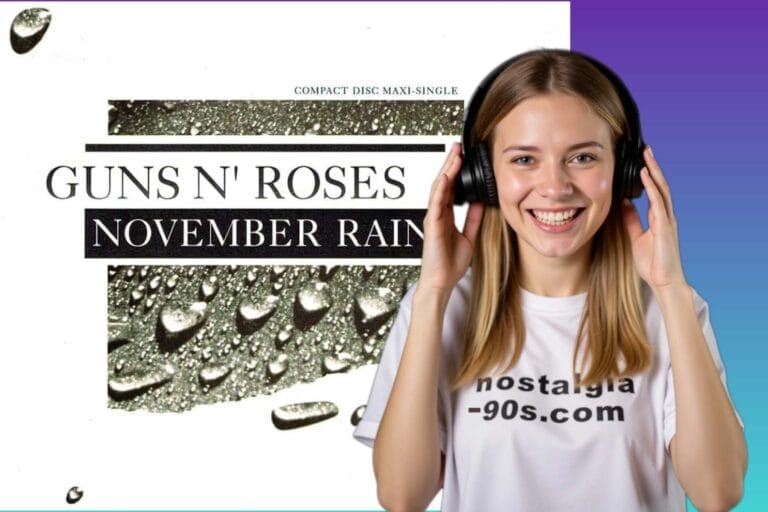
November Rain: Lyrics, Translation and Analysis of the Song
15. The Rythm of the Night – Corona (1993)
Corona’s “The Rhythm of the Night” is that 1993 Eurodance anthem that instantly transports you back to the dance floor of the ’90s. It’s the song that marked a turning point for the group and became a global anthem of the genre, thanks to its catchy rhythm and infectious energy. If you think about dance music from that era, it’s impossible not to remember this classic that evokes endless summer and boundless fun, and which is still played at themed parties.
16. Frozen – Madonna (1998)
Madonna’s “Frozen” is a smash hit from 1998 that marked a shift in her style, moving towards a darker, more mystical sound with touches of electronic music. The song, with its iconic music video where Madonna transforms into a sorceress in a desert, speaks of emotional coldness and the need to open oneself to love, with lines like “give yourself to me.” Beyond its success, its exploration of deeper themes and its aesthetic influenced by diverse cultures, including Indian, generated much discussion, solidifying it as one of the most memorable and beloved pieces of her career, and an anthem that many fans, particularly those in the LGBTQ+ community, felt was a personal turning point.
17. Creep – Radiohead (1992)
Radiohead’s “Creep,” released on their debut album “Pablo Honey” in 1993, is an alternative rock anthem that became the band’s biggest global hit. Although the song catapulted Radiohead to fame, becoming their most well-known track, it also ironically became a kind of “torture” for the group and their vocalist, Thom Yorke, who came to detest it because of its immense popularity and played it very little for years, although it has reappeared sporadically and ironically in recent shows.
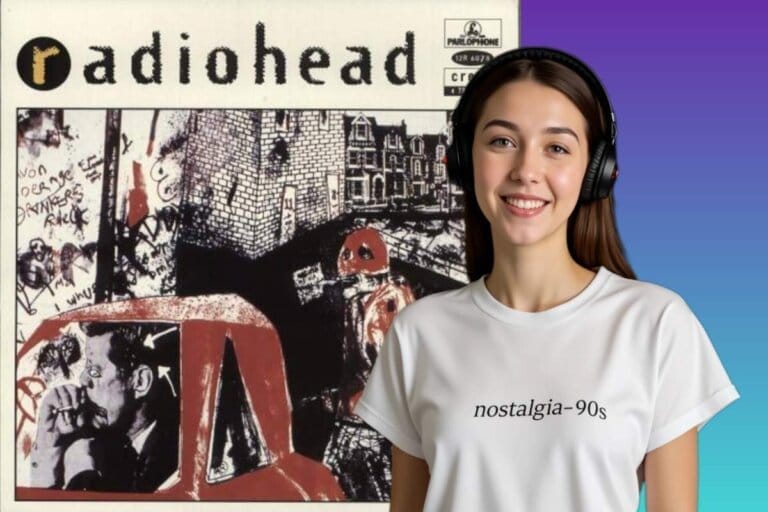
Creep: Lyrics, translation and analysis of the song
18. Enter Sandman – Metallica (1991)
Metallica’s “Enter Sandman” is that iconic track that marked a turning point in the band’s career. Released in 1991 as the first single from their famous “Black Album,” the song signaled a shift in direction for the kings of heavy metal, opting for a more accessible and powerful sound, produced by Bob Rock. This occurred just as grunge was beginning to take hold, and the move paid off handsomely: the guitar riff became an instant icon, the song climbed the charts worldwide, and it cemented its place as one of Metallica’s most emblematic tracks, proving they could reinvent themselves and continue dominating the scene.

Enter Sandman: Lyrics, translation and analysis of the song
19. Mr. Vain – Culture Beat (1993)
Culture Beat’s “Mr. Vain” was a true Eurodance smash hit that topped the charts in 1993, becoming a dance floor anthem across Europe and beyond. This 90s gem, with its catchy house and dance-pop rhythm, not only got you dancing but also featured playful and slightly cheeky lyrics, where vocalist Tania Evans sings to a super narcissistic guy (“Mr. Vain”), while rapper Jay Supreme embodies that outsized ego. It’s a song that defined 90s dance music and, although it gave Culture Beat their biggest hit, it remains pure nostalgic energy.
20. Genie in a Bottle – Christina Aguilera (1999)
“Genie in a Bottle,” Christina Aguilera’s 1999 smash hit, was a true sensation that catapulted her to teen pop stardom. With its catchy blend of soul-pop, teen pop, and R&B, the song uses the metaphor of a genie to address self-respect and boundaries in the game of seduction. Essentially, Christina tells her love interest that if they want to be with her, they have to know how to treat her right: you have to rub the bottle the right way for the genie to come out and grant your wish! It was an instant success, debuting at the top of the charts and establishing Aguilera as a pop star with attitude, a departure from the typical sweet image of other artists at the time.
21. Give It Away – Red Hot Chili Peppers (1991)
“Give It Away,” a killer track from the Red Hot Chili Peppers’ album “Blood Sugar Sex Magik,” is much more than just an incredible funky beat and the iconic “What I got, you got to give it to your mama.” The song draws inspiration from an experience Anthony Kiedis had with Nina Hagen, and its central message is about the value of selflessness and sharing, with the refrain “Give It Away” acting as an anthem to altruism. It’s that vibe of giving without expecting anything in return that makes this song a timeless classic, brimming with positive energy and thought-provoking lyrics.
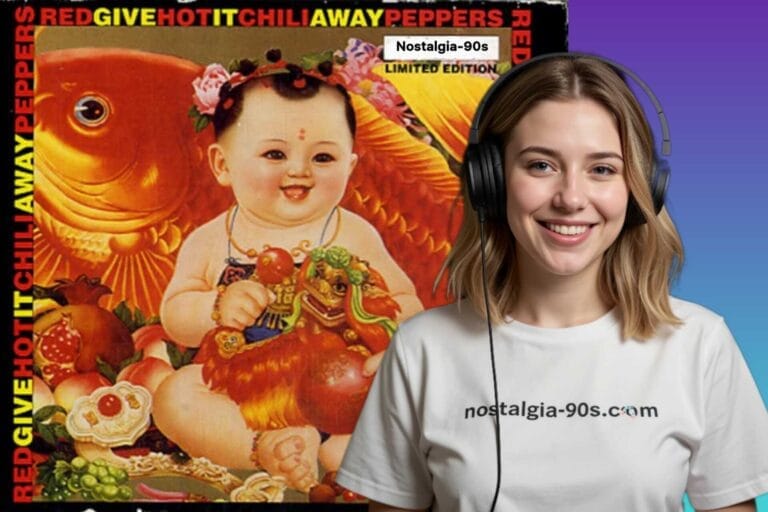
Give It Away: Lyrics, translation and song analysis
22. Bullet with Butterfly Wings – The Smashing Pumpkins (1995)
“Bullet with Butterfly Wings” by The Smashing Pumpkins is an anthem brimming with angst and nihilism that encapsulates the feeling of the album “Mellon Collie and the Infinite Sadness.” The lyrics, with their famous line “Despite all my rage I am still just a rat in a cage,” reflect Billy Corgan’s growing unease with fame, feeling trapped and lacking control or “agency,” a sentiment linked to the demands of the record label at the time. The phrase “Bullet with Butterfly Wings” has been interpreted as a metaphor for something potentially lethal (the bullet) that is simultaneously harmless or futile (the butterfly wings), symbolizing the artist’s frustration and duality.
23. …Baby One More Time – Britney Spears (1998)
“…Baby One More Time” is the hit song that launched Britney Spears, at just 16 years old, to stardom in 1998—and boy, did she ever! This teen pop and dance-pop anthem not only became her debut single but also redefined the sound of the late ’90s, selling millions of copies and catapulting her to the title of “Princess of Pop.” The song, which deals with the desire for an ex-boyfriend to return, is an instant classic that, according to Rolling Stone, is one of the best debut singles of all time.
24. Self Esteem – The Offspring (1994)
“Self Esteem” by The Offspring is that ’90s anthem that tells the story of a guy who, even though he knows he’s in a toxic relationship and is being treated terribly, keeps going back to it. Dexter Holland nailed the lyrics from the perspective of someone who feels trapped, a victim of the situation, and who basically lacks the self-love to leave. It’s the perfect song to talk about those awful dynamics where you know you’re being hurt, but you stay, telling yourself “this is the last time.”
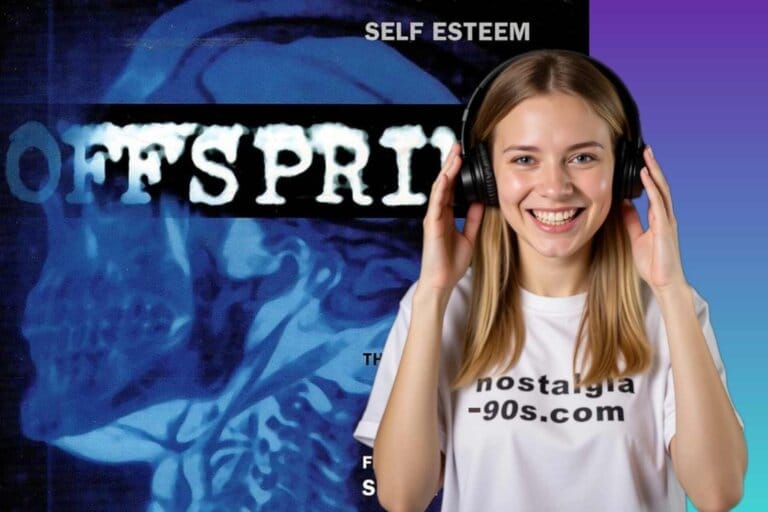
Self Esteem: Lyrics, translation and song analysis
25. Just a Girl – No Doubt (1995)
Get ready to rock because No Doubt’s “Just a Girl” is a ’90s anthem that’s still going strong! This song, written by Gwen Stefani about her experience of life as a woman and her struggles with her strict parents, is a brilliant display of sarcasm. Stefani sings about what it means to be “just a girl, all pretty and petite” to challenge the condescending view that denies her rights. It was a smash hit that catapulted No Doubt to fame, becoming a classic that embodies feminist struggles and remains relevant in today’s culture, proving that protest, even to the beat of ska-punk, never goes out of style!
26. Canned Heat – Jamiroquai (1999)
Jamiroquai’s “Canned Heat” is that funky, disco anthem that instantly gets you dancing, but if you look at the lyrics, it’s so much more than just a beat! The song hides a feeling of anger and frustration with the daily grind, with the protagonist feeling trapped and longing to escape that monotonous life. It’s the perfect anthem for when you’re fed up with the same old thing and just want to break free and shake things up.
27. No Scrubs – TLC (1999)
TLC’s “No Scrubs,” a smash hit from the late ’90s, became an instant anthem for anyone tired of guys who didn’t contribute anything, whom they called “scrubs.” The song is pure attitude and female empowerment, setting the bar for what women expected in a partner: a car, a job, and, above all, independence. Its catchy R&B beat and iconic music video choreography solidified its place as a pop classic that continues to resonate today with its clear and direct message: no time for losers!

No Scrubs: Lyrics, translation and analysis of the song
28. Ironic – Alanis Morissette (1996)
Alanis Morissette’s “Ironic” is that song we all know, and while it makes us think of funny or unfortunate situations, it sparked a huge debate about whether what it describes is truly “ironic.” It’s part of her hugely successful album “Jagged Little Pill,” which broke records. Interestingly, Alanis even poked fun at herself by adding the line “it’s singing ‘Ironic,’ when there are no ironies” in a later performance. Besides being a worldwide hit, the song also served as a platform for Morissette to show her support for marriage equality, even changing a verse at the GLAAD Media Awards to make it explicit.
29. Always – Bon Jovi (1994)
“Always,” by Bon Jovi, is that powerful, epic ballad that touches your soul. Released in 1994 as a single from their compilation album “Cross Road,” it became a worldwide hit. Interestingly, the song was originally written for a film, but Jon Bon Jovi wasn’t convinced and shelved it until a friend persuaded him to revisit it. It’s an anthem to eternal love and the struggle for it, catapulting it to become one of the most iconic rock ballads, and to this day it continues to rack up millions of streams!
30. Symphony Of Destruction – Megadeth (1992)
Megadeth’s “Symphony of Destruction” is a killer track that, despite its heavy sound, has a crystal-clear political message. The song compares political leaders to the famous Pied Piper of Hamelin, the legend where the musician led children and rats alike without question—just like people blindly follow their rulers! And surprisingly, Dave Mustaine himself drew inspiration from The Beatles’ chords for the chorus. A thrash metal anthem with a touch of social commentary and a dash of unexpected inspiration.

Symphony Of Destruction: Lyrics, translation and song analysis
31. Rythm Is a Dancer – Snap! (1992)
Snap!’s “Rhythm Is a Dancer” was a massive Eurodance hit in the early 90s. Released in 1992, this German song, with its pulsating rhythm and Thea Austin’s soulful vocals, instantly became a dance floor anthem worldwide, even winning an MTV Video Music Award! Its success was phenomenal, remaining at number one on the charts for weeks and selling millions of copies, cementing Snap!’s status as a legend of the genre and marking a turning point in dance music of that decade.
32. Say My Name – Destiny’s Child (1999)
Destiny’s Child’s “Say My Name” is a great song about that common relationship drama, where the lyrics put you in the right situation: if your boyfriend is talking to someone else, ask him to say your name, see if he dares! But the song itself had its own soap opera, as the group was going through changes just when the single shot to number 1, adding an extra layer of tension to this late ’90s R&B hit.
33. Hallelujah – Jeff Buckley (1994)
Jeff Buckley’s “Hallelujah” is a legendary version that elevated Leonard Cohen’s original song to another level of intensity. The thing is, Buckley gave it a deeply personal and earthly meaning, describing it as the “hallelujah of orgasm”—much more than just a religious hymn! His interpretation is far more raw and emotional than Cohen’s, transforming it into an anthem to love in all its forms (and its losses). In fact, it’s so iconic that many discovered it thanks to movies like Shrek. Sadly, its massive success came after his tragic death, leaving his version as an unforgettable legacy of sensitivity and a spectacular voice.

Hallelujah: Lyrics, translation and analysis of the song
34. Believe – Cher (1998)
Cher’s “Believe,” released in 1998, was a smash hit that revitalized the artist’s career and became an anthem of empowerment following a breakup. Most striking was that the song marked a radical shift in her style, fully embracing dance-pop and, above all, popularizing the famous “Cher effect”: the pioneering and distinctive use of Auto-Tune to distort her voice, something that was endlessly imitated. With its catchy rhythm, the song was not only a worldwide success (reaching number one in 23 countries) but also won a Grammy and is considered one of her most important releases, cementing her status as a pop culture icon.
35. Sing It Back – Moloko (1998)
Moloko’s “Sing It Back” is a dance anthem that, curiously, almost didn’t see the light of day in its current form. Róisín Murphy began writing the lyrics in New York, inspired by the “devotional” vibe of gospel house clubs. Although the original version on the album “I Am Not a Doctor” was more experimental, it was Boris Dlugosch’s 1999 remix that catapulted it to success, turning it into a club anthem and Moloko’s first major hit, even reaching number one on the US Billboard Dance Club Play chart.
36. To the Moon & Back – Savage Garden (1996)
“To the Moon & Back” by Savage Garden, released in 1996, was a smash hit that catapulted the Australian duo to international fame, appearing on their debut album. Written by Darren Hayes and Daniel Jones, this pop song with electronic touches became a worldwide success, reaching high positions on the charts in several countries and achieving Gold and Platinum certifications. It’s one of those catchy tunes you’re sure to remember, cementing Savage Garden’s place in the late ’90s music scene just before their other major hit, “Truly Madly Deeply.”
37. Around the World – Daft Punk (1997)
“Around the World” is a fantastic track by Daft Punk, released in 1997 on their album “Homework.” It’s a prime example of French House and Funk, with a super catchy rhythm that makes you want to dance! The most intriguing aspect of the song is its minimalist lyrics, which practically repeat the phrase “Around the world” ad infinitum. But it’s precisely this cyclical repetition, along with its danceable beat, that explores themes like globalization and the cyclical nature of life. Furthermore, its music video, directed by Michel Gondry, is an iconic visual gem that perfectly complemented the single’s success, propelling the song to the top of dance charts worldwide.
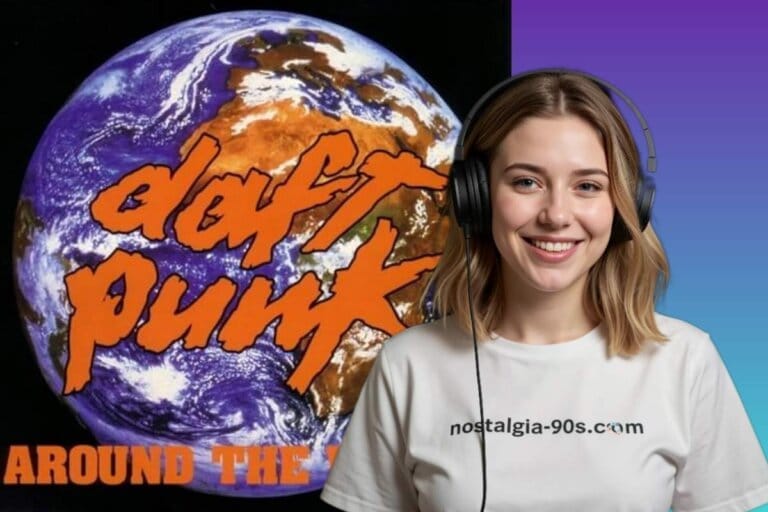
Around the World: Lyrics, translation and analysis of the song
38. Fear of thr Dark – Iron Maiden (1992)
“Fear of the Dark” is a killer heavy metal track by the legendary band Iron Maiden, released in 1992 and the title track of their ninth studio album. Written by bassist Steve Harris, it’s one of those epic songs that captivates you with its atmosphere, ranging from soft and melancholic to pure metal fury. In fact, its 7:22-minute live version, recorded in Helsinki, became a hugely popular single, proving it to be an essential classic in their concerts. It’s the perfect ending to an album that marked a milestone as the first produced by Harris and the last with Martin Birch!
39. Everybody – Backstreet Boys (1997)
“Everybody (Backstreet’s Back)” by the Backstreet Boys is a 1997 dance-pop anthem that, beyond being a dance floor banger, marked a turning point in pop culture. Composed by the geniuses Max Martin and Denniz Pop, the song cemented the band’s status as the “princes of pop.” And who can forget its campy horror music video? Although its title and lyrics suggested a comeback, it was actually the massive hit that catapulted them to worldwide fame, helping to define the pop sound of the late nineties.
40. Killing in the Name – Rage Against the Machine (1992)
“Killing in the Name,” by Rage Against the Machine, is a powerful rock anthem that hits you hard from the very first riff. Released in 1992, it’s not just music to jump around to; it’s a protest anthem that emerged in the aftermath of the Rodney King beating and the Los Angeles riots. The song is a direct and brutal critique of police brutality, with powerful lyrics and a final chorus that is repeated ad nauseam, making it one of the band’s most iconic and politically charged songs.
41. Missing – Everything But the Girl (1994)
Everything But the Girl’s “Missing” was a major turning point for the band. Before this 1994 hit, they were known for their more indie, folk, and jazz style, but with “Missing” (and its famous Todd Terry remix), they launched themselves into the dance music scene. The song, from the album Amplified Heart, was a massive success, critically acclaimed, and has indeed earned a place on lists of the greatest dance songs of all time. Interestingly, it became popular without a major initial promotional push, proving it was a hit in its own right! It reached number three in the UK and topped the charts in several countries, including Canada, Germany, and Italy.

Missing: Lyrics, translation and analysis of the song
42. The Bad Touch – Bloodhound Gang (1999)
“The Bad Touch” by Bloodhound Gang is a party anthem bursting with cultural references and clever sexual metaphors, featuring the catchy chorus of “Do it like they do on the Discovery Channel.” Released in the late ’90s, the song is a prime example of the band’s irreverent and explicit humor, using silly comparisons—from Waffle House and Coca-Cola to “Tool Time” and the game “Battleship”—to comically and carefree describe desire, perfectly capturing the satirical and mischievous spirit of the era.
43. Lump – The Presidents of the United States of America (1995)
“Lump” by The Presidents of the United States of America is an alternative post-grunge track with a very peculiar sense of humor. The song, which is more or less what it says, was inspired by a combination of the songwriter Chris Ballew’s experience with a benign brain tumor and a vision he had of a woman in a swamp. It’s famous for its bizarre lyrics, such as the one about the “Lump” sitting alone in a swamp confusing the piranhas, serving as an example of how the band took the post-grunge formula and injected it with large doses of eccentric comedy instead of the usual angst.
44. Losing My Religion – R.E.M. (1991)
“Losing My Religion” by R.E.M. is a fantastic song from the early ’90s that, although many think it’s about faith, is actually about Michael Stipe singing about that uncomfortable feeling of insecurity and jealousy in a relationship, that “what will I say now?” that paralyzes you. The phrase “losing my religion” is a Southern expression meaning to be at your breaking point, losing your patience or composure. R.E.M., an alternative rock band with roots in Athens, Georgia, nailed it with this song, and its iconic music video, full of artistic references, propelled the song to worldwide fame, making it one of the undisputed anthems of the decade and a cornerstone of rock.
45. Brimful of Asha – Cornershop (1997)
“Brimful of Asha,” by the British Asian band Cornershop, is a catchy 1997 song that pays tribute to the legendary Indian singer Asha Bhosle, whose name also means “hope.” It was a major moment for popular culture in the UK, as this indie rock song managed to bring the spirit of Bollywood to the charts, merging two musical worlds and delivering an anthem full of meaning and good vibes.

Brimful of Asha: Lyrics, translation and song analysis
46. No Limit – 2 Unlimited (1993)
“No Limit” by 2 Unlimited is a Eurodance anthem that swept across dance floors and the charts in early 1993. This powerful cocktail of techno and high-energy music became a global phenomenon, reaching number 1 in almost all of Europe, including the UK. It was the lead single from their album “No Limits!” and is remembered for its frenetic rhythm and catchy chorus, which cemented its place as one of the most iconic dance songs of the 90s.
47. All That She Wants – Ace of Base (1992)
“All That She Wants,” that Ace of Base hit from 1992, is the classic Swedish anthem that fused pop with reggae and techno rhythms. The song became a massive worldwide success, playing everywhere and reaching number 1 in almost all of Europe and number 2 in the US. The most curious thing is its lyrics, which, in a catchy tune, tell the story of a femme fatale who isn’t looking for eternal love, but rather “another baby” (a boyfriend) to run off with tomorrow—a real knockout on the 90s dance floor!
48. Alive – Pearl Jam (1991)
Pearl Jam’s “Alive” is much more than a grunge anthem; in fact, Eddie Vedder’s lyrics are based on a very personal and difficult story: the revelation that the man he believed to be his father wasn’t, and that his biological father had already died. Initially, Vedder conceived the phrase “I’m still alive” as a curse, reflecting the trauma, but the incredible response and energy of the audiences at concerts turned its meaning on its head. Thanks to his fans, what began as a narrative of pain and confusion transformed into a cry of survival and empowerment, making this iconic song a true anthem of resilience.
49. I’ll Fly with You – Gigi D’Agostino (1999)
“I’ll Fly with You,” by Gigi D’Agostino, is one of those Eurodance anthems that gets you dancing, but it also has a surprisingly melancholic side. Although it sounds like pure 90s and early 2000s party music, with that catchy house rhythm, there’s a popular theory that the lyrics hide a rather sad story: it’s about two separated lovers, where one voice is that of a lonely ghost girl and the other is that of a heartbroken man. The curious thing is that Gigi D’Agostino, the Italian DJ and producer, recorded both voices, giving this classic a special touch that, beyond the dance floor, invites you to listen closely.
50. Back For Good – Take That (1995)
“Back For Good” by Take That is a triumphant ballad released in 1995 that became a massive hit, written by Gary Barlow in just fifteen minutes. This song, which reflects on love, life, and second chances with a soft rock feel reminiscent of artists like George Michael, won the Brit Award for British Single of the Year in 1996. Besides its chart success, the music video is remembered as the band’s last to feature Robbie Williams before his departure later that year, and is famous for showing the group walking and dancing in the rain, an element they often incorporate into their live performances.
51. All the Small Things – Blink-182 (1999)
“All the Small Things” by Blink-182 was a mega-hit that catapulted the band from clubs to arenas, helping pop-punk go mainstream. The song, which Tom DeLonge wrote looking for something incredibly catchy for radio (and boy, did he succeed!), has a personal touch, inspired by romantic gestures from his then-girlfriend. Besides being a massive musical hit, its music video is legendary for its humorous parody of famous pop videos of the era, such as those by the Backstreet Boys and Britney Spears. A gem that marked the end of the ’90s and the beginning of the 2000s!
52. Celebrity Skin – Hole (1998)
Hole’s “Celebrity Skin,” released in 1998, is a killer track that perfectly captures the vibe of that era of fame and excess in Hollywood—and Courtney Love knew what she was talking about! The song is essentially a sharp and incredibly catchy look at the obsession with maintaining an image and living in the public eye, a critique of how superficial that world can be. It’s an anthem that, besides being super rock ‘n’ roll, invites you to reflect on the “glamour” of celebrities with a touch of irony.

Celebrity Skin: Lyrics, translation and analysis of the song
53. Doo Wop (That Thing) – Lauryn Hill (1998)
Lauryn Hill’s “Doo Wop (That Thing)” is not only one of the most iconic songs of the late ’90s, but also a powerful social statement wrapped in a sound that blends classic soul and hip hop. In this song, Hill delivers a direct critique of both men and women, highlighting hypocrisy, materialism, and the loss of values in relationships, especially within the youth culture of the time. With a structure that alternates between rapped verses and a retro-tinged sung chorus, the artist revives the doo-wop aesthetic to reinforce a timeless message: the importance of self-respect and personal awareness.
54. Zombie – The Cranberries (1994)
“Zombie” by The Cranberries is a killer alternative rock track with grunge influences that was released in 1994 and quickly became an anthem. While musically it departs somewhat from the band’s usual style with its distorted guitars, it’s the lyrics that truly resonate. Vocalist Dolores O’Riordan wrote it as a deeply emotional reflection on the Northern Ireland conflict, particularly inspired by the Warrington bombing. It was a massive worldwide hit, reaching number 1 in several countries, and remains their most iconic song to this day.
55. Black Hole Sun – Soundgarden (1994)
Soundgarden’s “Black Hole Sun” is that killer track that hooks you with its psychedelic and mysterious vibe. Although Chris Cornell said the title came from mishearing a news report, the song became a 90s anthem, released in 1994 on their album “Superunknown.” People often interpret it as a vision of hopelessness or depression, although some see it as positive and apocalyptic. Musically, it’s amazing, blending alternative rock and grunge with unusual chords that give it that melancholic yet powerful feel. Furthermore, its music video, directed by Howard Greenhalgh, was iconic and won awards, cementing “Black Hole Sun” as one of the most memorable and profound songs of the era.
56. American Jesus – Bad Religion (1993)
“American Jesus” by Bad Religion is a killer track that cleverly critiques the belief that God has a special relationship with the United States. Imagine how stunned lead singer Greg Graffin was when he heard George Bush say during the Gulf War, “We’ll win, because God is on our side.” What a statement! The song uses that as a starting point to question that idea, touching on serious issues like the use of religion to justify war and even antisemitism, all with that punk rock edge that makes you think.

American Jesus: Lyrics, Translation and Analysis of the Song
57. Ride on Time – Black Box (1990)
“Ride on Time” by Black Box is a house music classic that became one of the biggest global dance hits of the late 80s, though it comes with a curious story. It turns out that this hit by the Italian trio is famous for sampling, without permission, the powerful vocals of Loleatta Holloway from her song “Love Sensation.” And the funniest thing of all is the title: the Italians misheard the lyrics and thought Holloway was singing “ride on time” when she was actually saying “right on time.” A translation error that became a massive hit!
58. Friday I’m in Love – The Cure (1992)
What a fantastic song “Friday I’m in Love” by The Cure! Released in 1992 on their album *Wish*, this track is pure joy and an anthem to the end of the week. Forget about boring days, because when Friday arrives, “the shoes and the spirits lift,” as the lyrics say. It’s that universal feeling of leaving behind the tedium of routine to find happiness and love, perfectly capturing the spirit of the times and being a super simple and contagious expression of joy.
59. Teardrop – Massive Attack (1998)
“Teardrop” by Massive Attack is an atmospheric and melancholic track, a trip-hop classic released in April 1998. Interestingly, it’s the band’s only song to reach the top ten in the UK singles chart. The coolest thing about it is the hypnotic vocals of Elizabeth Fraser, the former lead singer of Cocteau Twins, whom Massive Attack chose over Madonna, who was also interested in recording it. It’s an iconic piece of music thanks to its slow tempo and that distinctive harp sound that makes it instantly recognizable.

Teardrop: Lyrics, translation and song analysis
60. Mrs. Robinson – The Lemonheads (1992)
Absolutely! While “Mrs. Robinson” is an undisputed Simon & Garfunkel classic, The Lemonheads gave it a super fresh twist in 1992. Imagine that iconic folk-rock song about seduction from the movie The Graduate, but now injected with pop-punk and grunge energy. The Lemonheads’ version became a huge hit, reviving the song for a new generation with a rockier, more youthful style that contrasted with the original melancholy. It’s the same lyrics by Paul Simon, but with a completely different attitude!
61. Alec’s Gone – The Toy Dolls (1993)
The Toy Dolls, a British punk rock band famous for their humor and “punk pathetique” style, bring us “Alec’s Gone,” which is likely another of their energetic and fun tracks. Although not their most well-known hit like “Nellie the Elephant,” this song fits perfectly into their repertoire: fast and catchy guitars, direct lyrics, and a tone that blends irony with everyday life, maintaining that mischievous and energetic spirit that has characterized the group since its formation in Sunderland in 1979.
62. Easy – Faith No More (1992)
Faith No More took an unexpected turn in their career with their version of “Easy,” a song that, unlike their usual style, was a faithful and accessible cover of a previous hit. Released in late 1992, this version became a huge success, surprising many and reaching a wider audience. They also showcased their characteristic sense of humor with the video, which featured them relaxing in a hotel with drag queens, and with the single’s unique cover art, which depicted two rhinoceroses mating.
63. End of the Road – Boyz II Men (1992)
Get ready for a classic! Boyz II Men’s “End of the Road” is that R&B ballad that defined the early ’90s, becoming the quintessential anthem of heartbreak and eternal (albeit broken) love. What’s most amazing is that it not only showcased the power of this group’s perfect vocal harmonies but also broke records, such as spending 13 weeks at number one on the Billboard Hot 100—a massive achievement at the time! The song, which was also featured on the soundtrack of the movie “Boomerang” (starring Eddie Murphy), cemented Boyz II Men as the undisputed kings of melodic R&B, making it clear that the pain of a goodbye never sounded so beautiful.

End of the Road: Lyrics, translation and analysis of the song
64. Roots Bloody Roots – Sepultura (1996)
“Roots Bloody Roots” is a Sepultura classic released in 1996 that marked a turning point in their career. This song, a cornerstone of groove metal and nu metal, is known for its brutal energy and for being the first single from their album “Roots.” It was recorded between October and December 1995 in Malibu, California, and produced by Ross Robinson. Besides being a hit on the European charts (reaching the top 20 in several countries), the song boasts an iconic music video filmed in a catacomb, solidifying the Brazilian band’s image as a global metal force.
65. 18 and Life – Skid Row (1989)
Skid Row’s “18 and Life” is much more than a hard rock hit; it’s a powerful ballad that tells the tragic story of Ricky, an 18-year-old whose life is derailed by a drunken binge and a terrible decision. Originally inspired by the struggles of guitarist Dave Sabo’s brother after returning from Vietnam, the song eventually focused on the universal theme of accidental killing: Ricky kills a friend with a gun he thought was unloaded, and, as the title suggests, his “crime is time” as he faces a life sentence. It’s an intense and catchy story about how youthful recklessness can have irreversible consequences.
66. MMMBop – Hanson (1997)
Hanson’s “MMMBop,” while incredibly catchy and fun, actually hides a rather profound message about life. The brothers wrote it when they were very young, and it deals with the importance of choosing your relationships wisely because many will be fleeting. It’s an optimistic reflection on the passage of time and the need to fight for the people and things you truly want to keep in your life—an idea that resonates deeply with the feeling of not fitting in or facing the challenges of growing up.
67. Jóga – Björk (1997)
“Jóga,” by Björk, is a fantastic track that arrived in 1997 as part of her album “Homogenic,” and it truly is one of those songs that captivates you. It’s a fascinating blend of electronica, baroque pop, and classical elements, with Björk’s unique ambient touch. The song is incredibly emotive, speaking of a transformative friendship and emotional intensity, all while evoking the incredible Icelandic landscapes. It was a hit as a single and stands out for its powerful strings and percussion, giving it an almost “volcanic” sound that defines the ambitious and personal tone of the entire album.

Jóga: Lyrics, translation and analysis of the song
68. Porcelain – Moby (1999)
Moby’s “Porcelain” is an iconic song, a fantastic track released as the sixth single from his acclaimed album “Play.” It’s one of those songs that critics embraced wholeheartedly for its superb arrangement, quickly becoming one of Moby’s signature tracks. The lyrics touch on themes of dreams, heartbreak, and vulnerability, with that feeling of trying to comfort someone or oneself while facing a goodbye and the possibility of not having been truly loved. An emotional journey with an infectious rhythm!
69. Ruby Soho – Rancid (1995)
“Ruby Soho” by Rancid is a killer punk rock/ska-punk track from 1995 that gets you pumped up despite its slightly melancholic story! With its super catchy rhythm, the song tells the tale of a musician going on tour, leaving his love, Ruby, behind. Although there’s sadness at the farewell, the atmosphere is perfect for moshing as the singer explains that he can’t resist following his musical dream. It’s one of Rancid’s anthems, from their album *…And Out Come the Wolves*, and perfectly captures the energy of punk at the time, blending melancholy with pure musical adrenaline.
70. Got ‘Til It’s Gone – Janet Jackson (1997)
Janet Jackson’s “Got ‘Til It’s Gone,” released in 1997 as the lead single from her album “The Velvet Rope,” is a fantastic track that blends R&B, pop, and hip-hop with a touch of reggae, and even features Q-Tip and a sample from Joni Mitchell herself! Critics hailed it as a masterpiece for its groundbreaking and deeply personal approach. The song is reflective, with “regretful” lyrics that speak of appreciating what one has in life, something Janet herself mentioned forced her to confront long-held pain. In addition to its success, the music video, set during apartheid-era South Africa, won a Grammy Award.
71. Intergalactic – Beastie Boys (1998)
“Intergalactic” by the Beastie Boys, released in 1998, is a fantastic track that instantly transports you with its futuristic and catchy rhythm, a clear example of how the group combined humor and brilliant samples, even borrowing a beat from a Bo Diddley record. This song was a huge success, breaking into the US Top 40 and becoming their biggest hit in the UK, as well as winning them a Grammy for Best Rap Performance, cementing the Beastie Boys as undisputed masters of alternative hip-hop in the late 90s.

Intergalactic: Lyrics, translation and analysis of the song
72. Block Rockin’ Beats – The Chemical Brothers (1997)
Get ready for an energy rush! “Block Rockin’ Beats” by The Chemical Brothers is pure late-90s big beat dynamite. It’s that track that blasts through your speakers with its powerful bass, infectious rhythm that keeps you moving, and those pounding vocal samples that drill into your head in the best possible way. It was an anthem that helped define the era, proving that electronic music could fill stadiums and turn any festival upside down. It’s one of those essential tracks that, even today, sounds as fresh as the day it was released.
73. Hedonism (Just Because You Feel Good) – Skunk Anansie (1997)
Skunk Anansie’s song “Hedonism (Just Because You Feel Good)” is about that bittersweet feeling when you see someone from your past, someone important, who seems very happy now. The narrator wonders if that happiness is real or just a facade, and if that person still remembers the moments they shared. It’s a nostalgic reflection on a past relationship and the uncertainty of whether the other person still thinks about you, even though life goes on.
74. Breathe – The Prodigy (1996)
The Prodigy’s “Breathe,” released on their 1996 album “Fat of the Land,” was a massive hit, reaching number one in the UK and much of Europe. It’s the track where Keith Flint shines with his twitchy vocals, blended with a chaotic yet incredibly danceable rhythm, full of powerful kick drums and a funky bassline. This song perfectly captured the rebellious and angry spirit of the youth at the time against the establishment, cementing The Prodigy’s status as the kings of rave rock worldwide.
75. Loser – Beck (1993)
Beck’s “Loser” is an iconic ’90s hit that actually started as a joke. Imagine Beck trying to rap in the kitchen and feeling a bit useless; that’s where the catchy line “I’m a loser, baby, so why don’t you kill me?” came from. Although many thought it was an anthem for Generation X and its “slacker” culture, Beck always said it was a parody of himself and his supposed lack of rapping skills, right when rap at the time was all about being the “winner” and having tons of money. It’s pure wit and irony that became a worldwide hit.

Loser: Lyrics, translation and analysis of the song
76. Un-Break My Heart – Toni Braxton (1996)
“Un-Break My Heart” by Toni Braxton, released in 1996 on her album *Secrets*, is that soul-stirring R&B and pop ballad. It was a worldwide hit, written by the renowned Diane Warren and produced by David Foster, and although Toni wasn’t initially keen on recording it, it ended up becoming one of her signature songs! Essentially, the song is a desperate and powerful cry from someone begging their ex-lover to come back and undo the pain of the breakup—a perfect metaphor for that universal desire to undo the emotional damage of being dumped.
77. I Wanna Be Down – Brandy (1994)
“I Wanna Be Down” is a killer R&B track by Brandy that, with its powerful beat and light synths, tells the story of a girl trying to pick up guys. She’s trying to convince a guy how great he is, with lyrics like “I wanna be down with what you’re going through / I wanna be down / I wanna be down with you.” The song marked Brandy’s debut, and its music video, where she appeared with a very “tomboy” look dancing in front of a Jeep, was a huge hit at the time, cementing her status as an R&B star in the ’90s.
78. Roads – Portishead (1994)
“Roads,” by the iconic Bristol group Portishead, is a trip-hop gem released on their debut album, *Dummy*, in the mid-90s, cementing their status as masters of the genre. The song is known for its dense, down-tempo atmosphere, enveloping you with deeply resonant samples and sounds. Beyond its flawless sound and classic status, the lyrics are often interpreted as a reflection on personal struggle or the difficult path ahead—that feeling of constantly battling, whether in life, in business, or simply trying to find meaning—making “Roads” an emotional soundtrack for those moments of deep introspection.
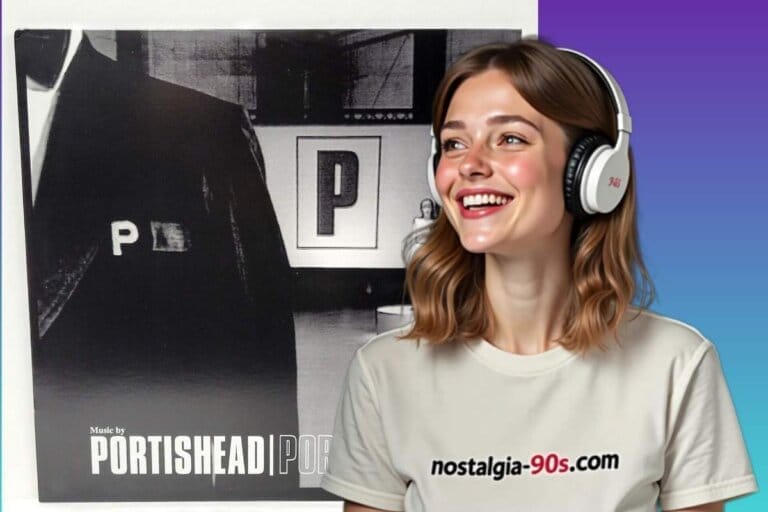
Roads: Lyrics, translation and analysis of the song
79. Torn – Natalie Imbruglia (1997)
Natalie Imbruglia’s “Torn” is one of those songs that sounds bright but hides a deep sense of emotional disillusionment. Released in 1997, the song speaks of the moment a relationship crumbles and the idealization of love gives way to vulnerability and confusion, encapsulated in the now-iconic line “I’m all out of faith.” Although many directly associate it with Imbruglia, the song was written by Scott Cutler, Anne Preven, and Phil Thornalley, and originally recorded by the band Ednaswap, but it was the Australian singer’s fragile and restrained performance that resonated with a wider audience. Its clean production, melancholic melody, and the contrast between the pop sound and the poignant lyrics turned “Torn” into a global hit and a generational anthem about heartbreak, cementing Imbruglia as one of the most recognizable voices of the late 90s.
80. Interstate Love Song – Stone Temple Pilots (1994)
Stone Temple Pilots’ “Interstate Love Song” is a 1994 anthem that defined the grunge and alternative rock era. Released on the album “Purple,” it quickly became an anthem, widely considered one of the best songs of the ’90s. With its catchy blend of grunge, hard rock, and even touches of country rock, this 3:14-minute track achieved commercial success and is a cornerstone of the band’s catalog, even being recognized by VH1 as one of the greatest hard rock songs of all time. The lyrics, written by Scott Weiland, are often interpreted as reflecting personal struggles and the lies within a relationship, adding a layer of lyrical depth to its powerful sound.
81. Alright – Supergrass (1995)
Supergrass’s “Alright” is that 1995 Britpop anthem that instantly puts you in a good mood. Although it became a youthful summer anthem, vocalist Gaz Coombes clarified that the song, part of their acclaimed debut album “I Should Coco,” wasn’t a rallying cry for their generation, but rather a nostalgic look back at being a pre-teen, around 13 or 14 years old, discovering life, girls, and their first drinks, perfectly capturing the band’s carefree and fresh energy.
82. Common People – Pulp (1995)
Pulp’s “Common People” is a Britpop anthem that cleverly and with a touch of anger criticizes those wealthy people who want to play at being “poor” or live “like ordinary people” simply for fashion or as a form of social tourism. The song, inspired by a Greek art student Jarvis Cocker met, highlights the contrast between wanting to experience working-class life as a temporary adventure and the harsh reality of those who have no other option. In short, the song tells these wealthy people that if they truly want to be like ordinary people, they should try being penniless and see if it still seems so “glamorous” to them.
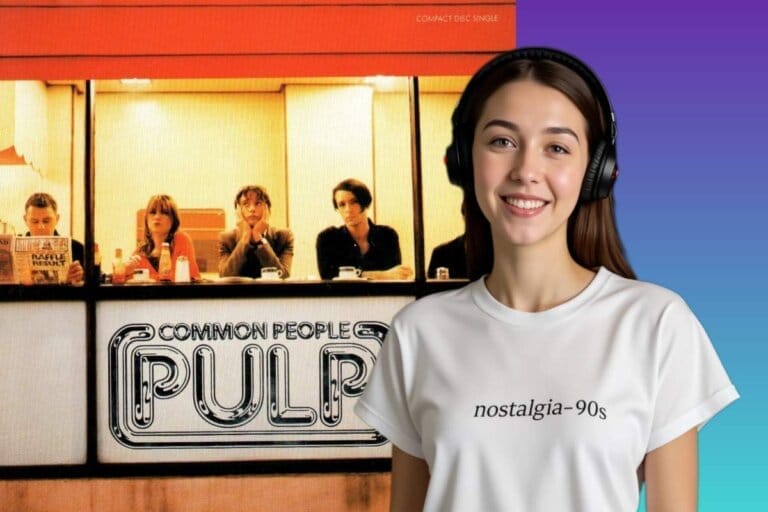
Common People: Lyrics, translation and analysis of the song
83. Linoleum – NOFX (1994)
NOFX’s “Linoleum” is a punk anthem that, curiously, has become one of their most popular tracks despite having no chorus or rhymes. The song is inspired by their friend Mark Curry, who had the peculiar habit of always being the last one up and, when it came to sleeping on the floor—as was common for NOFX in the ’80s—he specifically chose the linoleum kitchen floor. Essentially, the song celebrates a stripped-down life and the idea that possessions don’t matter, with the linoleum floor offering a constant source of support for these traveling punks.
84. One in a Million – Aaliyah (1996)
Aaliyah’s smash hit “One in a Million,” released in 1996, was a true game-changer ahead of its time. It wasn’t your typical R&B ballad, but a groundbreaking blend of trip-hop and drum and bass, thanks to the production of Timbaland and Missy Elliott. The song, about finding that one true love, was not only an R&B chart smash and a defining track for Aaliyah’s sound, but it also helped lay the groundwork for the futuristic R&B of the late ’90s and early 2000s. A must-listen classic!
85. Replica – Fear Factory (1995)
“Replica” by Fear Factory is a mind-blowing track, typical of the industrial metal sound the band popularized in the mid-90s. It’s one of the signature songs from their album ‘Demanufacture’ (1995), and it’s pure power: combining super-heavy riffs with Burton C. Bell’s signature vocal style, alternating between brutal screams and clean, melodic vocals. This contrast between aggression and melody, along with the fast-paced drums and the futuristic lyrics about the relationship between man and machine, makes it a classic that defines Fear Factory’s golden age.
86. Freak on a Leash – Korn (1998)
Korn’s “Freak on a Leash” is a killer track that marked a turning point in nu metal, making the band the (somewhat reluctant) kings of the genre. Released in 1998, the song, according to vocalist Jonathan Davis, is a brutal outburst against the music industry, feeling like a “phenomenon on a leash” for commercial gain. However, its real impact was much deeper, resonating as a survival anthem and a voice for thousands of young people who felt like freaks, helping them find a space where they felt understood, which demonstrates why it remains a timeless classic.
87. Stop! – Jane’s Addiction (1990)
“Stop!” by Jane’s Addiction is a killer track from their 1990 album, “Ritual de lo Habitual.” Imagine, it was a huge hit, reaching number one on Billboard’s Modern Rock Tracks chart for two weeks! The song is known for being quite chaotic—in a good way—with powerful rhythms that never quite settle, making its four minutes feel both shorter and longer. In short, it’s a key piece of alternative rock that defined an era.
88. Buddy Holly – Weezer (1994)
“Buddy Holly” by Weezer, from the iconic “The Blue Album” (1994), is a nostalgic anthem that catapulted the band to fame, shifting their rock sound to a more nerdy and introspective vibe that captivated millions. The song is famous for its catchy chorus where lead singer Rivers Cuomo compares himself to the legendary rocker Buddy Holly, and his girlfriend to actress Mary Tyler Moore. In fact, the track almost didn’t make the album because Cuomo wasn’t convinced, but producer Ric Ocasek insisted on including it, and thank goodness he did, because it became an anthem!
89. Them Bones – Alice in Chains (1992)
Alice in Chains’ “Them Bones” is a grunge explosion with the band’s signature sound, famous for its heavy riffs and Layne Staley’s vocals. The song, written by Jerry Cantrell, has a somewhat quirky rhythm and a direct energy, but its theme is surprisingly profound: it deals with facing mortality in a “short and sweet” way, as Cantrell put it. At its core, the message is a bit sarcastic, yet optimistic: we’re all going to end up as a pile of bones, so instead of being scared, enjoy the time you have left! It’s a brilliant and raw way of reminding us to live life to the fullest.
90. Seasons in the Abyss – Slayer (1990)
“Seasons in the Abyss” is the standout track from Slayer’s self-titled album, released in 1990, right at the height of thrash metal. The song grips you with its dark atmosphere and riffs that are pure Slayer, shifting from a slow, haunting rhythm to the savage speed that defines them. It’s a key piece that, while it may sound chaotic, ultimately reflects on serious themes such as corruption, mental despair, and even the motivations behind violence, all wrapped in the epic brutality that made Slayer a metal legend.
91. Walk – Pantera (1993)
Pantera’s “Walk” is that killer groove metal track from their album *Vulgar Display of Power* (1992) that became one of their most powerful anthems. The coolest thing about it is the heavy groove and that unmistakable Dimebag Darrell riff. But watch out, the lyrics have real substance: vocalist Phil Anselmo wrote this song as a “see you later” to friends who changed their tune and became envious after Pantera signed with a major label. Basically, he was telling them: “Take your bad vibes and go walk far away from me,” defending his own authenticity with a blast of metal!

Walk: Lyrics, translation and analysis of the song
92. Mary Jane – Mary J. Blige (1994)
“Mary Jane (All Night Long),” by Mary J. Blige, is an R&B gem from her acclaimed album *My Life* (1994), about wanting to put drama and arguments aside. Mary J. herself said the song reflects her desire to simply have fun and make peace with her partner that night, instead of continuing with the constant “fighting all the time” of that era, giving the lyrics a very personal and authentic touch. Musically, it’s also a gem thanks to the production of Sean “Puffy” Combs and Chucky Thompson, who even sampled classics like Rick James’ “All Night Long” and Teddy Pendergrass’ “Closed the Door,” making this track a hit full of soul and hip-hop flavor.
93. Praise You – Fatboy Slim (1998)
“Praise You,” by Fatboy Slim, is a fantastic big beat and alternative dance track released in 1999 that became an anthem thanks to its incredibly danceable rhythm and, notably, its impressive samples. The talented Norman Cook (Fatboy Slim) crafted this masterpiece from snippets of other songs, including a vocal sample from Camille Yarbrough’s “Take Yo’ Praise” and even a guitar riff from a Disney album. This blend of funky, soulful, and R&B sounds from the ’60s to the ’80s, filtered through a modern electronic lens, gave it a unique and fresh feel, guaranteeing you’ll be up and dancing.
94. Pull Me Under – Dream Theater (1992)
“Pull Me Under” by Dream Theater is a fantastic track that, although it sounds like pure progressive rock, has its roots in classical literature. The song is about accepting life without fear of death, and to write it, keyboardist Moore was inspired by none other than Shakespeare’s Hamlet—he even included a line from the play in the lyrics! And be warned, its abrupt ending, which some find strange, gives the impression that the narrator departs just as he accepts his fate.
95. Sugar – System of a Down (1998)
“Sugar” by System of a Down is a musical bombshell released in 1998 that grabs you by the throat. Beyond its heavy sound, the song is an explosive cocktail of political and existential critique, using “sugar” as a metaphor for all the addictive and harmful things we blindly consume, from junk food to sensationalist news. In this age of excess, the track criticizes how the system keeps us running in circles and consuming confusing information, capturing the madness and disillusionment of modern society. Essentially, it invites you to wake up, question everything, and, if necessary, scream at the absurdity.
96. Black No. 1 – Type O Negative (1993)
Type O Negative’s “Black No. 1” is a dark and deliberately exaggerated satire of early 90s goth subculture, built upon the slow, heavy riffs that define the band’s so-called doom metal. Peter Steele wrote the song with a wry tone, portraying a girl obsessed with black aesthetics, melancholy, and, of course, hair dye, turning the track into a kind of inside joke that many listeners took as a serious anthem. With its unusual length, tempo changes, and the characteristic contrast between Steele’s deep vocals and the almost theatrical backing vocals, the song constantly teeters between parody and genuine fascination with the dark. The result is a track that, unintentionally, became an alternative metal classic and a fundamental piece for understanding Type O Negative’s provocative and self-deprecating identity.
97. Closer – Nine Inch Nails (1994)
Nine Inch Nails’ “Closer,” from their acclaimed 1994 album *The Downward Spiral*, is much more than the controversial line that made it famous. While widely interpreted as an anthem of lust, Trent Reznor himself has said it’s actually a song about self-loathing and obsession. This catchy, industrial track, built on the iconic TR-606 drum machine beat, unexpectedly became a massive pop hit that propelled the band to stardom, resonating with audiences for its raw honesty about hitting rock bottom in a downward spiral of self-destruction.
98. Same Old Story – Pennywise (1995)
“Same Old Story” is a killer track by Pennywise, a legendary Californian punk rock band known for their energetic style and for being pioneers of melodic hardcore or “skate punk.” Like many of their songs, this gem deals with that constant frustration with things that never change: hypocrisy, social problems, or simply feeling like you’re always dealing with the same issues. It’s pure punk adrenaline with a clear message—perfect for letting off steam!
99. My Name is Mud – Primus (1993)
“My Name Is Mud” by Primus, released in 1993 as part of their album *Pork Soda*, is an alternative rock gem that plunges you deep into the mind of a character named “Mud.” The song is a kind of monologue where this peculiar “redneck” introduces himself and, in passing, explains quite directly why he ended up murdering an acquaintance while preparing to bury the body. It’s a dark story, but told in Primus’s unmistakable and often humorous style, with Les Claypool’s bass playing at its finest, making it a key and memorable track for the band.
100. Konception – Richie Hawtin (Plastikman) (1994)
“Konception” is a killer track by Plastikman, Richie Hawtin’s best-known alias, that fully immerses you in the world of mid-90s minimal techno. Released in 1994, this song is a perfect example of the hypnotic and incredibly atmospheric sound that characterizes Hawtin: repetitive rhythms, slowly transforming loops, and an enveloping feeling that draws you in. It’s music designed for the dance floor, but with a layer of experimentation that made it essential for understanding how underground electronic music evolved during that era.
Explore more content